🚚 Free shipping on orders over R800
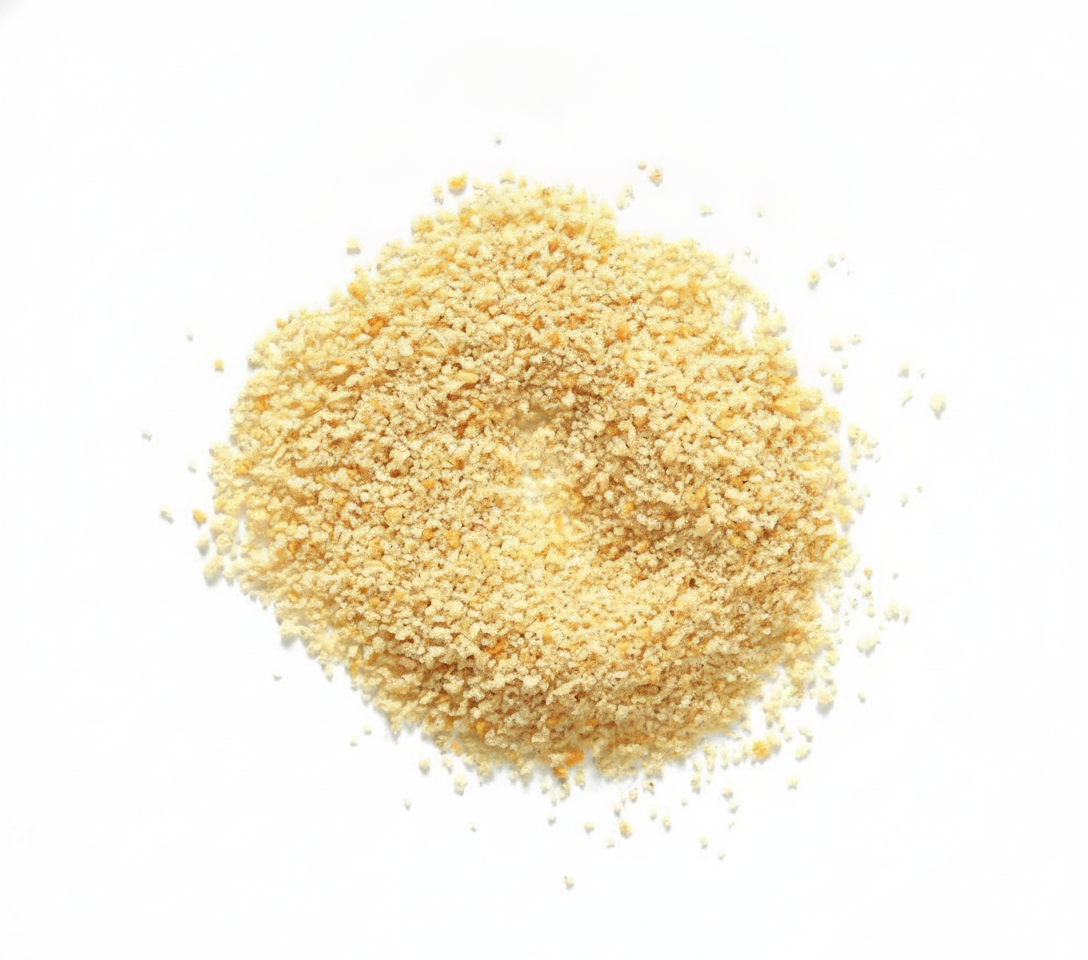
Breadcrumbs Premium 1kg

Typical Nutritional Information

C NutriRating

Typical values from reference food data. Actual products may vary. (per 100 g)

Nutrient per 100 g
Energy (kJ) 1,088.0
Energy (kcal) 260.0
Protein (g) 10.3
Carbohydrate (g) 26.7
of which total sugar (g) 3.5
Total fat (g) 12.5
of which saturated fat (g) 2.0
Dietary fibre (g) 0.9
Sodium (mg) 602.0
MorningStar

Breadcrumbs Premium 1kg

☆☆☆☆☆ No reviews yet.
C
NutriRating
60/100 · Typical values from reference food data. Actual products may vary.
10.3g
Protein (g)
0.9g
Dietary fibre (g)
3.5g
of which total sugar (g)
602mg
Sodium (mg)
R35.95
Breading (also known as crumbing) is a dry grain-derived food coating for a piece of food made from breadcrumbs or a breading mixture with seasonings. Breading can also refer to the process of applying a bread-like coating to a food. Breading is well suited fo...
In stock
SKU: Breadcrumbs Premium
Share:
7-day satisfaction guarantee
Dispatched within one working day of payment
Shipping calculated at checkout
Guaranteed safe & secure checkout
Breading (also known as crumbing) is a dry grain-derived
food coating for a piece of food made from breadcrumbs or a breading mixture
with seasonings. Breading can also refer to the process of applying a
bread-like coating to a food. Breading is well suited for frying as it lends
itself to creating a crisp coating around the food. Breading mixtures can be
made of breadcrumb, flour, cornmeal, and seasoning that the item to be breaded
is dredged in before cooking. If the item to be breaded is too dry for the
coating to stick, the item may first be moistened with buttermilk, raw egg, egg
wash or other liquid.
Breading contrasts with batter, which is a grain-based
liquid coating for food that produces a smoother and finer texture, but which
can be softer overall.

Ingredients

General ingredient information for shoppers. Not a laboratory analysis of this product and not medical advice.

wheat flour 2 1

Wheat flour is a staple ingredient made by grinding wheat grains. It's widely used in baking for breads, cakes, pastries, and pasta due to its gluten content, which provides structure and elasticity to dough. Different types of wheat flour vary in protein content, affecting their baking properties.

Typical nutrients Typical per 100 g
Carbohydrates 76.0 g
Protein 10.0 g
Fiber 3.0 g

Good for

  • Versatile for baking and cooking
  • Provides structure to baked goods

Watch outs

  • Contains gluten, unsuitable for those with celiac disease or gluten sensitivity
water 3 1

Water is an essential, calorie-free liquid vital for all known forms of life. In cooking and baking, it's used as a solvent, to hydrate ingredients, and to create steam for cooking. It's also crucial for maintaining proper body functions.

Good for

  • Essential for hydration
  • Calorie-free
  • Versatile cooking ingredient

Watch outs

  • Drinking excessive amounts very quickly can be dangerous
yeast 2 1

Yeast is a single-celled microorganism used as a leavening agent in baking, particularly for bread. It ferments sugars in dough, producing carbon dioxide gas and alcohol, which causes the dough to rise and contributes to the bread's flavor and texture. It's also used in brewing alcoholic beverages.

Typical nutrients Typical per 100 g
Protein 13.0 g
Fiber 7.0 g

Good for

  • Leavens bread and other baked goods
  • Contributes to flavor development

Watch outs

  • Requires specific temperature conditions to activate and thrive
salt 2 2

Salt is a mineral composed primarily of sodium chloride, used as a seasoning and preservative in food. It enhances flavor and is essential for many bodily functions.

Typical nutrients Typical per 100 g
Sodium 38,758.0 mg

Good for

  • Essential for fluid balance and nerve function
  • Enhances food flavor

Watch outs

  • Excessive intake can contribute to high blood pressure
  • Limit intake for heart health
You May Also Like

Related Products