🚚 Free shipping on orders over R800
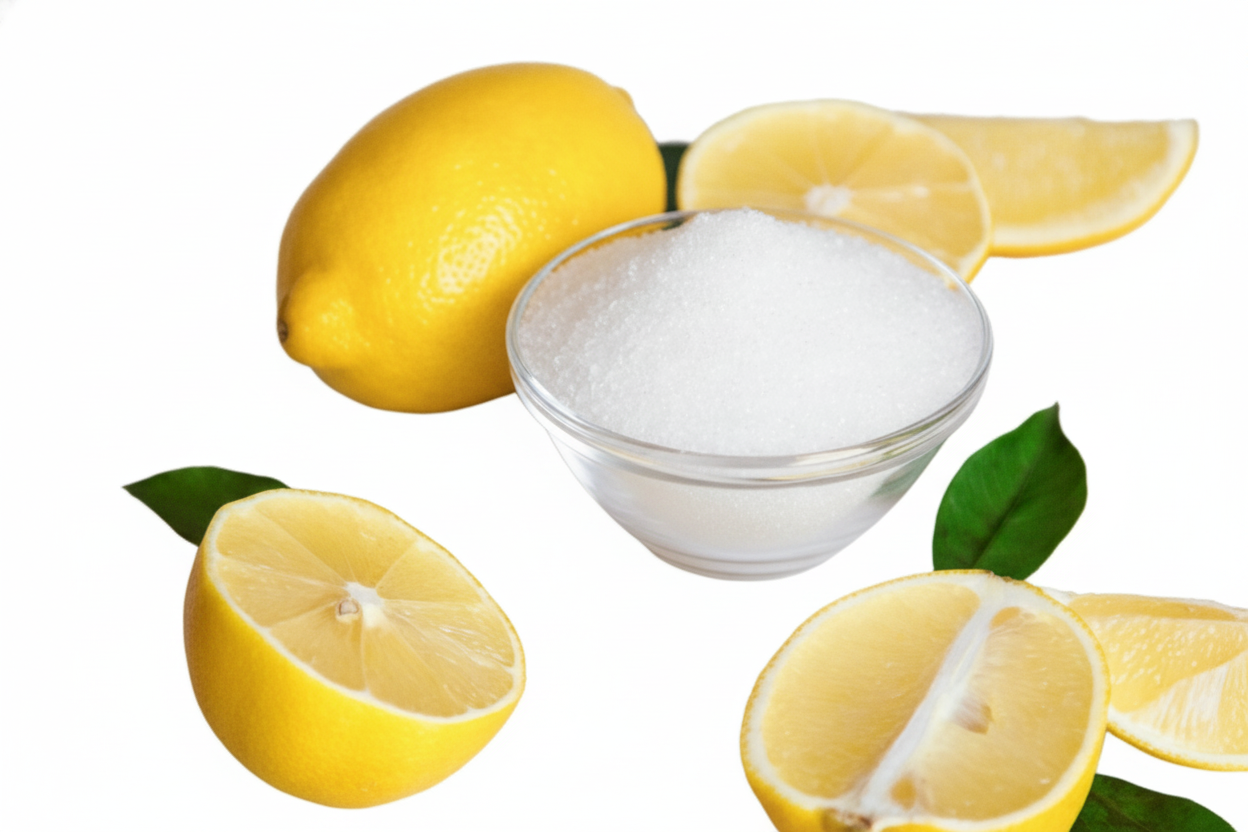
Citric Acid 1kg

Typical Nutritional Information

E NutriRating

Typical values from reference food data. Actual products may vary. (per 100 g)

Nutrient per 100 g
Energy (kJ) 1,419.0
Energy (kcal) 339.0
Protein (g) 11.7
Carbohydrate (g) 73.5
of which total sugar (g) 73.5
Total fat (g) 0.5
of which saturated fat (g) 0.3
Dietary fibre (g) 0.0
Sodium (mg) 968.0
MorningStar

Citric Acid 1kg

☆☆☆☆☆ No reviews yet.
E
NutriRating
20/100 · Typical values from reference food data. Actual products may vary.
11.7g
Protein (g)
0.0g
Dietary fibre (g)
73.5g
of which total sugar (g)
968mg
Sodium (mg)
R49.94
Because it is one of the stronger edible acids, the dominant use of citric acid is as a flavouring and preservative in food and beverages, especially soft drinks, and candies. Citrate salts of various metals are used to deliver those minerals in a biologically...
In stock
Share:
7-day satisfaction guarantee
Dispatched within one working day of payment
Shipping calculated at checkout
Guaranteed safe & secure checkout
Because it is one of the stronger edible acids, the dominant use of citric acid is as a flavouring and preservative in food and beverages, especially soft drinks, and candies. Citrate salts of various metals are used to deliver those minerals in a biologically available form in many dietary supplements. Citric acid has 247 kcal per 100g.
Citric acid can be added to ice cream as an emulsifying agent to keep fats from separating, to caramel to prevent sucrose crystallization, or in recipes in place of fresh lemon juice. Citric acid is used with sodium bicarbonate in a wide range of effervescent formulae, both for ingestion (e.g., powders and tablets) and for personal care (e.g., bath salts, bath bombs, and cleaning of grease). Citric acid sold in a dry powdered form is commonly sold in markets and groceries as "sour salt", due to its physical resemblance to table salt. It has use in culinary applications, as an alternative to vinegar or lemon juice, where a pure acid is needed. Citric acid can be used in food colouring to balance the pH level of a normally basic dye.

Ingredients

General ingredient information for shoppers. Not a laboratory analysis of this product and not medical advice.

citric acid 2 1

Citric acid is a natural acid found in citrus fruits like lemons and limes. It's widely used in the food industry as a natural preservative, a flavoring agent to add a sour taste, and an emulsifier.
Good for

  • Acts as a natural preservative, extending shelf life.
  • Adds a tart, sour flavor to foods and beverages.

Watch outs

  • Highly acidic; consuming large amounts directly may irritate tooth enamel or sensitive stomachs.
You May Also Like

Related Products