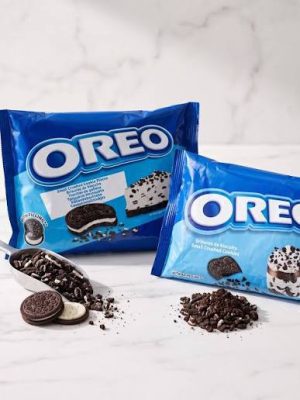
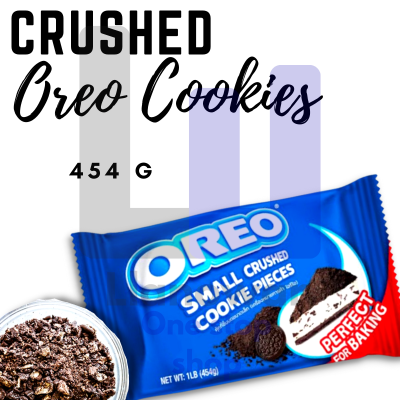
Oreo Small Crushed Monde 12x454g
R1,024.95
Typical values from reference food data. Actual products may vary. (per 100 g)
| Nutrient | per 100 g |
|---|---|
| Energy (kJ) | 1,655.0 |
| Energy (kcal) | 396.0 |
| Protein (g) | 0.0 |
| Carbohydrate (g) | 98.9 |
| of which total sugar (g) | 59.0 |
| Total fat (g) | 0.0 |
| of which saturated fat (g) | 0.0 |
| Dietary fibre (g) | 0.1 |
| Sodium (mg) | 44.0 |
General ingredient information for shoppers. Not a laboratory analysis of this product and not medical advice.
Sugar, typically granulated sucrose, is a common sweetener used in many foods and beverages. It provides a sweet taste and can also contribute to texture and browning in baked goods. It is a source of carbohydrates.
| Typical nutrients | Typical per 100 g |
|---|---|
| Carbohydrates | 100.0 g |
Glucose syrup is a food syrup made from the hydrolysis of starch, often corn starch. It's used as a sweetener, thickener, and to prevent crystallization in various food products like candies, baked goods, and beverages.
| Typical nutrients | Typical per 100 g |
|---|---|
| Carbohydrates | 78.0 g |
Modified cornstarch is cornstarch that has been physically, enzymatically, or chemically altered to improve its functional properties. It's commonly used as a thickener, stabilizer, or emulsifier in processed foods like sauces, soups, and desserts.
Citric acid is a natural acid found in citrus fruits like lemons and limes. It's widely used in the food industry as a natural preservative, a flavoring agent to add a sour taste, and an emulsifier.
Natural and artificial flavors are food additives used to enhance the taste and aroma of food products. Natural flavors are derived from natural sources, while artificial flavors are synthetically produced to mimic specific tastes.
Carnauba wax is a natural wax that comes from the leaves of a palm tree. It's often used to give a shiny coating to candies, fruits, and other foods, helping them look appealing and stay fresh longer. It's also used in some vegan products as an alternative to beeswax.
No major concerns noted for this ingredient.
Beeswax is a natural wax produced by honey bees. It's commonly used in food as a glazing agent for candies, fruits, and baked goods, giving them a slight shine and helping to prevent moisture loss. It's also found in some chewing gums.
Confectioner's glaze, also known as shellac, is a resin secreted by the female lac bug. It's used to create a hard, shiny coating on candies, chocolates, and other confections, protecting them and making them look more attractive. It helps prevent stickiness and extends shelf life.
These are artificial food colorings used to add vibrant hues to a wide range of food products, including drinks, candies, and baked goods. Red 40 gives a red color, Yellow 5 provides a yellow shade, and Blue 1 adds a blue tint. They are used to enhance the visual appeal of food.